


Blog


L Carnosine vs. L Carnitine: What's the difference?
2026-06-03
L-Carnosine and L-Carnitine are frequently confused in the marketplace due to the similarity of their names. However, ranging from their molecular structures to their physiological mechanisms, these two substances represent entirely distinct directions in research and development.
As a leading global supplier of bioactive ingredients, Kintainutri® recognizes that precisely distinguishing the targeted functions of these two compounds is crucial for assisting clients in product sourcing, optimizing product formulations, and addressing key market pain points. We will provide a comprehensive breakdown of the core differences between them, as well as their multifaceted application scenarios.
What Are L Carnosine and L Carnitine?
L-Carnosine
L Carnosineis a hydrophilic dipeptide that occurs naturally in animal skeletal muscle and brain tissue. It possesses exceptional Antioxidant, anti-glycation, and metal-ion chelating capabilities. It functions by competitively binding to free sugars, thereby protecting proteins from oxidative and glycation-induced damage.
Preclinical studies suggest that L-Carnosine offers potential protective benefits against diabetic complications and neurodegenerative diseases associated with high zinc levels (such as Alzheimer's disease). To address the issue of its susceptibility to degradation within the body, polymer-encapsulation and microencapsulation technologies are frequently employed to enhance its stability and bioavailability, making it suitable for use in high-end dietary supplements and cosmeceutical formulations.

L-Carnitine
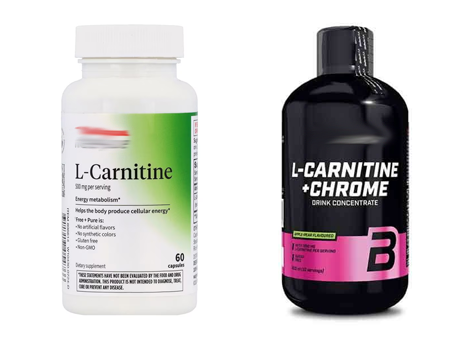
L-Carnitine is a naturally occurring quaternary ammonium compound that plays an extensive role in the lipid metabolism of mammals, plants, and microorganisms. Its primary function is to transport long-chain fatty acids from the cytosol into the mitochondria for beta-oxidation, a process that generates cellular energy, while simultaneously helping remove harmful metabolic byproducts. Therefore, it serves as a critical carrier in cellular energy metabolism.
It is important to note that only the L-isomer of carnitine possesses biological activity, whereas the D-isomer acts as a competitive inhibitor; consequently, industrial procurement must strictly specify the Pure L-form. Although a healthy human body can endogenously synthesize sufficient quantities of L-Carnitine, supplementation becomes significantly beneficial in cases of genetic deficiencies, disease states, or during periods of high-intensity physical exertion, aiding in the maintenance of myocardial energy, the acceleration of fat burning, and the alleviation of fatigue.

Benefits: L Carnosine vs. L Carnitine
L-Carnosine
Antioxidant Properties
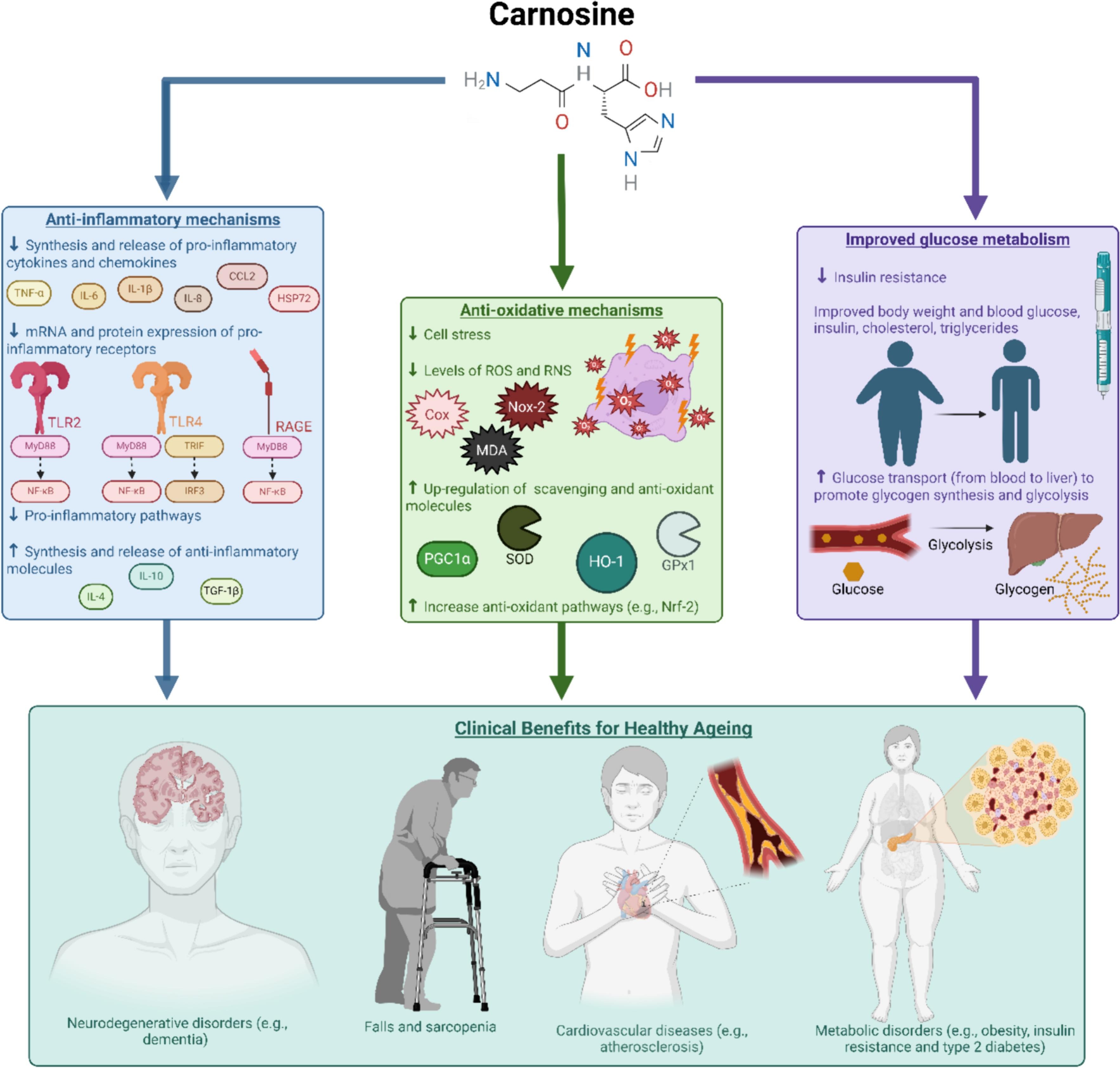
L-Carnosine acts as a highly efficient endogenous antioxidant, capable of directly scavenging reactive oxygen species (ROS), hydroxyl radicals, and peroxyl radicals. It also chelates transition metal ions, such as copper and iron, to prevent them from catalyzing the generation of more destructive free radicals. Through this dual mechanism, carnosine effectively protects cell membrane lipids from oxidative damage, reduces the production of lipid peroxidation products (such as malondialdehyde), and simultaneously enhances the activity of endogenous antioxidant enzymes (such as superoxide dismutase, SOD), thereby bolstering the cell's own antioxidant defense capabilities.
Anti-Glycation
L carnosine powder exhibits significant anti-glycation effects, It captures and neutralizes reactive carbonyl species, such as 4-hydroxynonenal, to competitively inhibit the formation of Advanced Glycation End-products (AGEs). AGEs cross-link collagen and elastin, leading to a loss of skin elasticity, yellowing, and the formation of wrinkles. By acting as a "sacrificial molecule" that preferentially reacts with sugars, carnosine protects the amino groups of proteins from glycation, thereby preserving the normal structure and function of collagen fibers and delaying glycation-related pathologies such as skin aging and vascular sclerosis.
Cellular Repair
Studies indicate that L-carnosine accelerates skin wound healing, particularly in aging models. Its mechanisms include: activating the PI3K/Akt signaling pathway to counteract the inhibitory effects of glucocorticoids on keratinocyte proliferation and migration; and regulating the expression of E-cadherin/N-cadherin as well as matrix metalloproteinase activity to promote epithelial-mesenchymal transition (EMT) and re-epithelialization. Furthermore, carnosine mitigates local oxidative stress and inflammation, thereby creating a favorable microenvironment for tissue repair.
L-Carnitine
Effects on Muscle and Exercise Performance
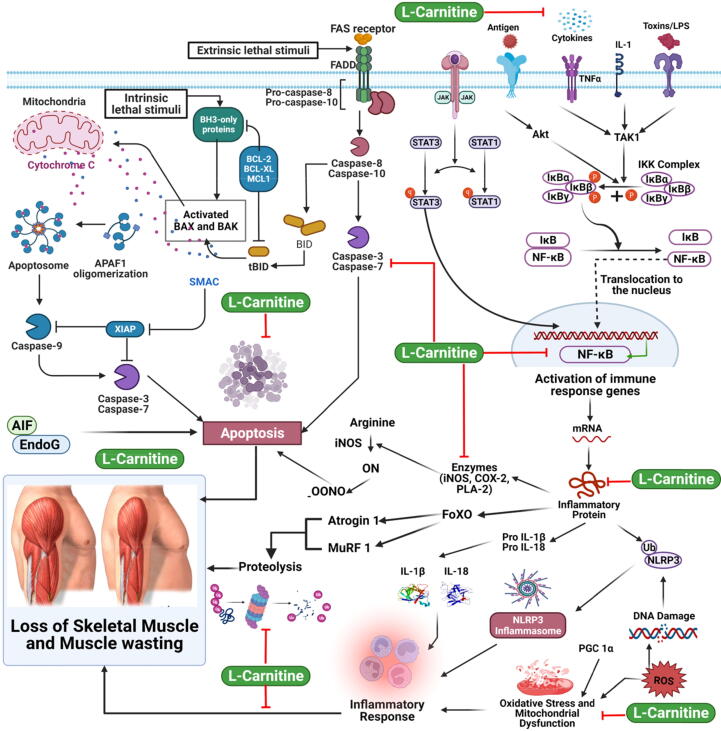
L-carnitine (LC) effectively combats muscle atrophy and enhances exercise endurance. LC improves exercise endurance by facilitating the transport of long-chain fatty acids into the mitochondria for beta-oxidation, thereby increasing fat utilization and oxygen consumption. During high-intensity exercise, LC binds to excess acetyl-CoA, reducing the accumulation of lactic acid in the bloodstream; concurrently, it improves endothelial function, enhances blood flow and oxygen delivery to the muscles, and promotes recovery.
L-carnitine (LC) effectively combats muscle atrophy and enhances exercise endurance. L-carnitine improves exercise endurance by facilitating the transport of long-chain fatty acids into the mitochondria for beta-oxidation, thereby increasing fat utilization and oxygen consumption. During high-intensity exercise, LC binds to excess acetyl-CoA, reducing the accumulation of lactic acid in the bloodstream; concurrently, it improves endothelial function, enhances blood flow and oxygen delivery to the muscles, and promotes recovery.
Regarding Weight Loss
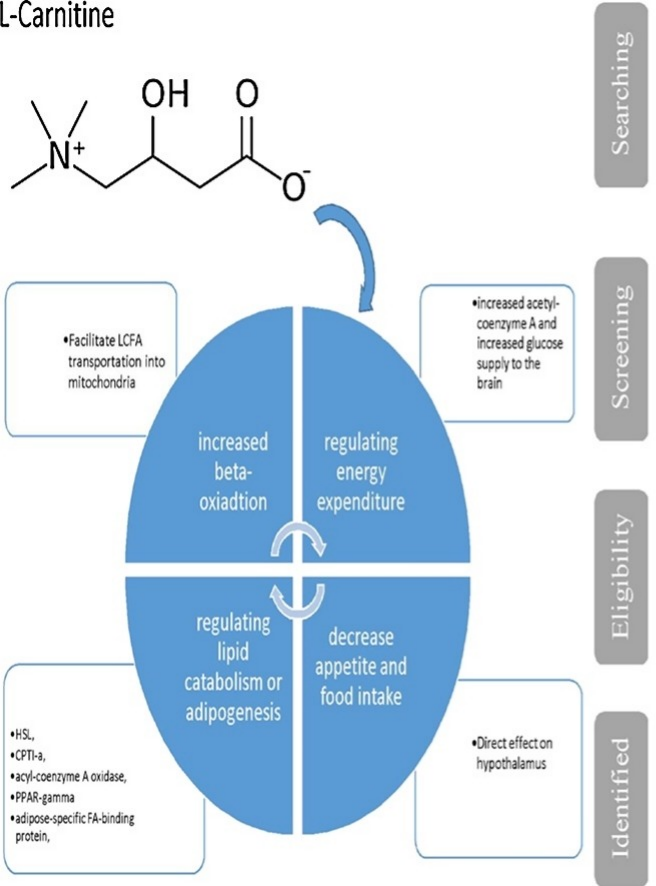
L-Carnitine (LC) promotes lipid metabolism by transporting long-chain fatty acids into the mitochondria for beta-oxidation; this process facilitates weight loss, improves insulin resistance, and may also reduce appetite through hypothalamic mechanisms. L-carnitine supplementation has been shown to mitigate weight gain, epididymal fat accumulation, elevated blood triglyceride levels, and hepatic fat levels induced by high-fat diets, thereby alleviating fatty liver conditions.
Furthermore, by increasing lipolysis (fat breakdown) and decreasing lipogenesis (fat synthesis), it helps improve glucose intolerance. When combined with Nicotinamide Riboside, it can further enhance hepatic metabolism and exert synergistic anti-obesity effects.
Application: L Carnosine vs. L Carnitine
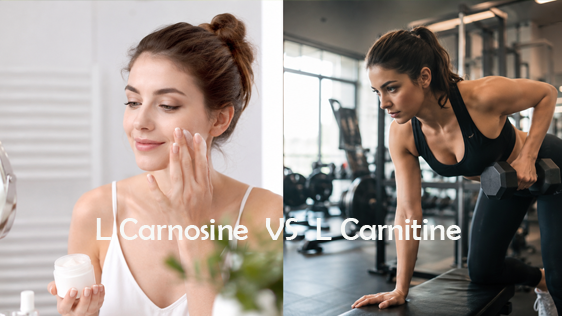
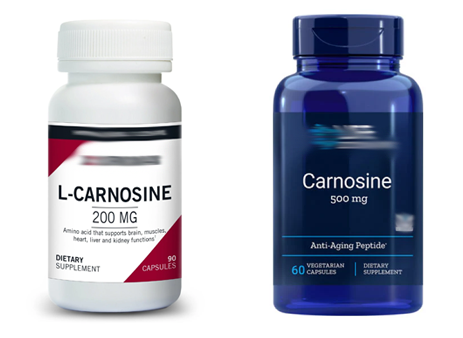
L Carnosine powder is primarily utilized in the fields of high-end anti-aging and oral beauty supplements. In cosmeceuticals, it is frequently incorporated into serums, face creams, and eye creams; leveraging its antioxidant and anti-glycation properties, it protects collagen from degradation caused by sugar, thereby diminishing fine lines and improving skin elasticity and radiance.In oral products, such as beauty drinks, anti-glycation tablets, and capsules, L-Carnosine acts internally to scavenge free radicals and inhibit the formation of Advanced Glycation End-products (AGEs), thereby delaying skin aging, minimizing collagen loss, and enhancing skin elasticity.
L-Carnitine is primarily employed in contexts involving aerobic endurance exercise and fat loss. Its core function involves transporting long-chain fatty acids into the mitochondria for beta-oxidation, thereby facilitating the utilization of fat as an energy source and enhancing oxygen utilization efficiency. Additionally, it helps reduce lactic acid accumulation during high-intensity exercise, improves blood flow and oxygen delivery to the muscles, and accelerates post-exercise recovery. It is well-suited for endurance activities, such as long-distance running and cycling, as well as for weight management and metabolic regulation.
About Kintainutri®
L-Carnosine and L-Carnitine are not interchangeable, rather, they are two premium functional ingredients designed to address distinct market demands. As a supplier, Kintainutri® clearly articulates the differences between these two compounds, enabling us to provide you with more precise formulation recommendations and support the strategic differentiation of your product lines. We offer L Carnosine powder with a purity specification of 98–99% and L-Carnitine with a purity of 99%. If you are interested, we invite you to contact us!
Reference:
[1]: https://pmc.ncbi.nlm.nih.gov/articles/PMC8704793/
[2]: https://pmc.ncbi.nlm.nih.gov/articles/PMC8300828/
[1]: https://pmc.ncbi.nlm.nih.gov/articles/PMC8704793/
[2]: https://pmc.ncbi.nlm.nih.gov/articles/PMC8300828/